
Bombs Bursting in Air
“Not everything that is faced can be changed; but nothing can be changed until it is faced.”
~James Baldwin
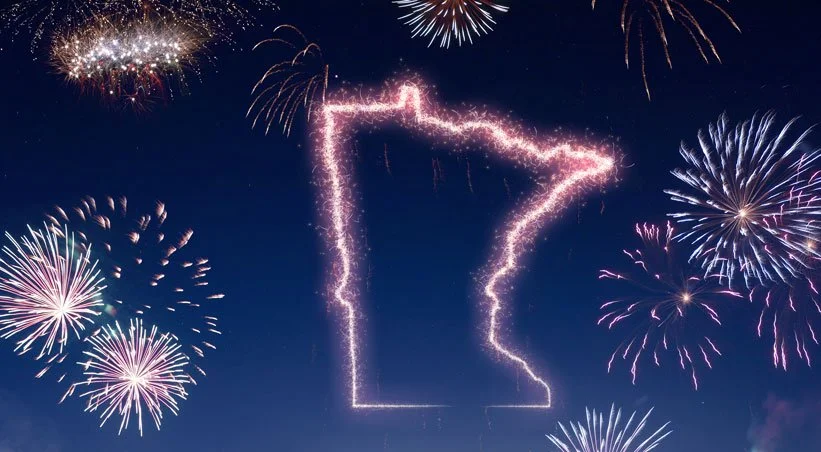
Celebrating the 4th of July with fireworks offers a visually resplendent and historically symbolic experience, fostering a sense of patriotism and community. However, private fireworks displays around Square Lake present significant drawbacks, including liability risks, environmental pollution, health hazards, and physical danger to people, pets, and property.
As a four-decade Square Lake homeowner, I’ve personally observed that:
Fireworks potency exponentially increases with each passing year. Today’s mortar shells are not the firecrackers we grew up with as children.
Most of us are invested in Square Lake for peace, tranquility, solitude, and quietude.
Explosions that shake our houses, terrify our children, frighten our guests, petrify our pets, and pollute our lake water, are neither reasonable nor acceptable.
Because of their inherent danger, fireworks displays now require trained and licensed professionals - applying carefully administered technical, safety, and logistical controls - to reduce the resultant fire, ecological, human and wildlife danger to which we are exposed when neighbors knowingly or unknowingly ignore May Township’s rules-of-law.
Unless we take action to educate and inform, the likelihood of injury, property damage, lake pollution, and God-forbid human and animal fatalities, increase exponentially, as fireworks’ explosive power multiplies.
Six reasons why private fireworks displays that explode above or near Square Lake are unacceptable.
1) They’re illegal.
Minnesota law completely bans any consumer fireworks that go up in the air or explode. This includes firecrackers, bottle rockets, roman candles, mortars, missiles, and shells. Violations carry misdemeanor penalties of up to 90 days in jail or a $1,000 fine.
In Minnesota, non-explosive, non-aerial fireworks like sparklers, cones, and party poppers are legal. However, the sale, possession, and use of most fireworks, including those that explode or leave the ground, are prohibited, including firecrackers, bottle rockets, roman candles, and mortar shells. It’s also completely illegal to light any fireworks on public property, including streets, sidewalks, alleys, schools, and parks.
2) What’s permitted & what’s prohibited.
Understanding what is permitted can prevent misdemeanor charges, $1,000 fines, and up to 90 days of jail time:
Prohibited (Illegal)
Firecrackers
Bottle rockets & missiles
Roman candles
Mortars, shells, & aerial displays
Permitted (Legal)
Wire or wood sparklers
Ground-based fountains & cones
Ground spinners & snakes
Snappers & party poppers
Larger, more egregious violations involving significant amounts of fireworks can be charged as gross misdemeanors with fines up to $3,000 and a year in jail.
3) Risk Profile.
The following news reports underscore the growing danger and related risk profile of private fireworks displays:
2026 Minnesota Tragedy: Man dies after firework explodes in hand at former ammo plant in Ramsey County. According to the Lake Joanna Fire Department, emergency crews were called to the location near County Road I in Arden Hills at 1:30 a.m. on July 5. Investigators believe the man was holding a mortar tube with a 2-inch firework when it exploded.
2025 Minnesota Tragedy: A 13-year-old boy dies on the Fourth of July after a firework hit him in the chest, according to the Mahnomen County Sheriff's Office. At 11:14 p.m., officers responded to the 300 block of New Circle Drive in Naytahwaush for a 13-year-old boy who was hit by a firework. Authorities arrived and found that the boy was not breathing and had no pulse.
Severe Injuries. On July 6, 2026, a man in Morrison County was hospitalized after a mortar-style firework exploded in his hand, launching a projectile directly into his torso.
Extreme Heat: Legal novelty items like sparklers burn at temperatures up to 2,000 degrees Fahrenheit, which is hot enough to melt some metals and cause severe, life-altering third-degree burns.
Fire Hazards: Despite regional summer rainfall, the Minnesota State Fire Marshal warns that grass, debris, and structures easily catch fire from stray sparks. Over the last few decades, the Minnesota State Fire Marshal's Office has tracked at least 875 formal fireworks injuries, though they note that these numbers are historically underreported.
Spike in Burn Unit Admissions: The Hennepin County Medical Center burn trauma unit reported treating 18 severe fireworks burn patients leading into this season-the highest single-year case total recorded by the unit
since 2020.Anatomy of Injuries: According to data utilized by the Eden Prairie Police Department, hands and fingers remain the the most frequently damaged body parts (36%), followed closely by injuries to the head, face, and ears
(22%).
The rationale against fireworks legalization primarily centers around safety and fire risks.
Minnesota's laws forbid usage of aerial, exploding fireworks, setting it apart from neighboring states Wisconsin, Iowa, North Dakota and South Dakota. Unless you're a municipality or fair association with a permit and a licensed operator, that rules out Roman candles, bottle rockets, firecrackers and really anything going boom in the air. Sparklers, fountains and snakes are fair game. Minnesotans caught exploding, using, possessing, selling or advertising fireworks can be charged under state statute 624.21.
Data provided by the Minnesota Department of Public Safety showed Minnesota had 26 known injuries from fireworks in 2024 and 22 in 2023. The running total since 1989 is 866, including three deaths reported in 2015,
2021 and 2022.For fire damage, June and July dollar losses were as steep as about $3.8 million in 2023 from 106 incidents. The concern with illegal fireworks is partly about how far they travel away from the operator. Embers and sparks are hard to control far away.
For further information, please read: Minnesota has stricter fireworks laws than its neighbors – MN POST 7-03-25.
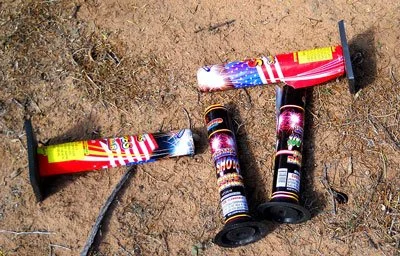
4) Fireworks cause chemical contamination and negatively impact the natural balance of Square Lake's ecosystem.
Fireworks release hazardous chemicals and heavy metals like ammonium perchlorate, copper compounds, sulfur dioxide, lead nitrate, lead chloride, potassium nitrate, barium, strontium, and sodium compounds into a lake.
Chemicals and debris can be toxic to fish and other aquatic organisms, potentially leading to death or reduced reproductive success.
Chemicals like perchlorate can accumulate in fish tissue, potentially reaching harmful levels for animals that consume them, including humans.
Chemical contamination and debris can disrupt the natural balance of the lake ecosystem, affecting plant life, microorganisms, and the overall food chain.
Fireworks often contain plastic components that can break down into microplastics, which can be ingested by fish, other wildlife, and people. Ingesting microplastics from fireworks debris can pose long-term health risks to animals and humans.
The hazardous chemicals and heavy metals emitted from fireworks negatively affect our drinking water.
The debris from fireworks, including spent casings and unexploded materials, cause even more pollution. All fireworks release a cocktail of pollutants and gases into the air. These tiny particles, less than 2.5 micrometers in diameter, can deeply penetrate our lungs, increasing the risk of respiratory illnesses such as asthma and heart disease. Shockingly, a single fireworks display can spike local PM2.5 particulate levels by up to 42%, surpassing safe limits and affecting air quality for days afterward.
5) Fireworks are harmful to soil.
Heavy metals and chemicals released by fireworks contaminate soil microorganisms, reduce soil health, and leach into the ground water that we consume

6) Fireworks produce excessively loud noises and air pollution.
The explosive sounds of fireworks, reaching up to 150 decibels, have profound effects on wildlife, pets, and humans, especially to those sensitive to noise, and veterans suffering from PTSD.
These loud noises cause stress, anxiety, and even hearing damage in animals, disrupting nesting behaviors and survival instincts. The cumulative effects of fireworks on wildlife are staggering. For example:
Birds abandon nests.
Mammals experience panic reactions.
Invertebrates show altered behaviors in response to the abrupt disturbances and chemical residues left behind.
And for our four-legged friends, fireworks explosions elicit severe stress and high-anxiety causing pets to become frightened, disoriented, and prone for serious physical and emotional injury while trying to escape.
Governing Local and State Rules of Law.
May Township Code sections 506.02.B.4 - Nuisances; 506.09.B.5 - Noise Control; and 512.02.C - Special Events, remind us that:
Special Events for fireworks require a permit.
Fireworks, by their very nature, are in violation of Noise Controls.
Fireworks after 9 PM violate noise restriction requirements for Special Events.
To learn more about what fireworks are legal in Minnesota, read more here.
What Can We Do as Good Neighbors?
Beyond their transient beauty, fireworks contribute significantly to air and noise pollution, chemical contamination, waste generation, and wildlife, pet and human disturbance. While fireworks light up the sky with brilliance, their environmental impact underscores the urgency for thoughtful consideration and proactive risk-management measures. As communities embrace traditions, advocating for sustainable alternatives, and responsible disposal practices, stricter regulations become paramount.
Most importantly, please:
Be wise, considerate, a good neighbor, and abide by the law.
Attend a risk-free, professionally orchestrated, public fireworks celebration nearby - such as the 4th of July display in Stillwater - minutes away!
Please be reminded that collaborative discussion and consensus-building yields positive results. Your Square Lake Association Board achieved a satisfying fireworks solution with Golden Acres management after months of collaborative discussion in 2024, as highlighted in these reassuring emails from June 26 and July 1, 2025.
I remain hopeful that a solution to the fireworks concerns shared by an ever-increasing number of Square Lake homeowners will be positively advanced in the coming year. Thanks to those of you who constructively engage in this learning and living-together process.
Respectfully,
Jim Seidl, President
Square Lake Association